Today, generative artificial intelligence (GenAI) is changing how people discover information and make decisions. From a business perspective, large language model (LLM) powered solutions that can generate text, analyse documents, summarise insights, or answer questions are now considered strategic assets rather than an experimental concept. Leaders understand the ability of LLMs to accelerate information discovery from heaps of organizational data and aid in accelerating critical workflows, and support new and innovative customer engagement experiences.
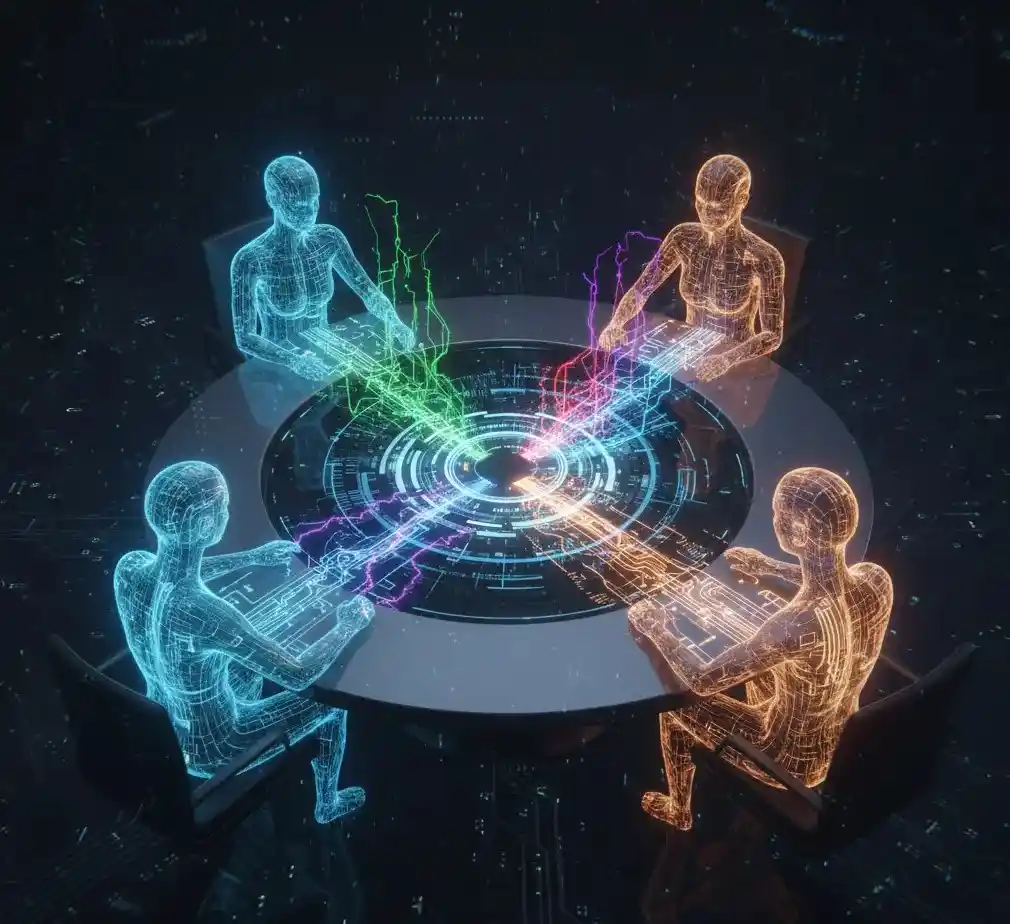
Among the highest-profile LLMs are four key players: OpenAI’s models (commonly referenced by the “GPT” series), Llama (from Meta Platforms), Gemini (from Google DeepMind), and Claude (from Anthropic). They are widely regarded as among the most capable in the modern LLM landscape and are extensively used worldwide in several scenarios. As enterprises spearhead transformative exercises powered by generative AI, it is extremely important to have a clear understanding of how these popular models help address complex enterprise challenges in different ways and select the right option for sustainable growth.
The key differences
To simplify the understanding of differences between popular LLM models, the best approach is to focus on the most foundational elements or traits that they exhibit with regard to a technology perspective. Let us focus on Architecture, Reasoning, and Enterprise Adaptability as the 3 dimensions on which each of these models is ranked to understand their differences better.
Architecture
Models from OpenAI (for example, the GPT family) are based on transformer architectures that are designed for broad general-purpose tasks. They can handle a wide range of textual inputs and have a very high tolerance for grammatical errors. OpenAI ensures that appropriate weights are added to the inference engine while creating results. The company trains and hosts these models centrally, then provides access through cloud APIs. This approach makes it easy for companies to start using the models quickly without managing infrastructure. The trade-off is that enterprises have less control over the underlying model weights and must rely on the provider for updates and security.
Meta’s Llama family of models emphasizes flexibility and research friendliness as central to their architectural design. Llama models are often made available in ways that let organisations run them on their own servers or fine-tune them for a specific domain or use case. This gives companies more control over deployment and costs, but it also means they may need more internal technical expertise to manage, secure, and optimise the models for production use in real-life scenarios.
Gemini is built from the ground up to handle multiple input types such as text, images, and audio. Google designed Gemini’s architecture to run across large data centres globally and, in some versions, closer to the edge or mobile devices. The multimodal architecture helps considerably when enterprises face a need to process a diverse range of data streams in their key workflows. But the model can also tie the solution more closely to Google’s cloud and tooling ecosystem if the enterprise opts for a fully managed option.
Anthropic’s Claude focuses on an architecture that supports steady, step-by-step reasoning and predictable behaviour for outcomes. Claude is offered in managed forms that emphasise safety controls and consistent responses, which make it very attractive for enterprises that need clear governance and traceability. The trade-off here is that deployment options are more focused on managed services rather than fully open, self-hosted installations.
Overall, on the architecture front, we can summarize the capabilities of the 4 popular models as below:
Models hosted and managed by a provider (OpenAI, Claude, Gemini) let organisations move quickly with adoption since they avoid infrastructure work, but they reduce low-level control and can increase ongoing costs.
Models designed for flexible deployment (Llama) offer more control and on-premises options, but they typically require more internal technical effort for tuning, security, and maintenance.
Multimodal architectures (Gemini) are strong when you must process images, audio, and text together, but they may come with tighter vendor coupling if you prefer fully managed services.
Reasoning
OpenAI models like GPT-4 excel at complex reasoning and structured analysis. They perform well in tasks that require step-by-step logic or synthesis of long text-heavy documents, and fine-tuning for niche domains can be limited and may require advanced prompting competencies.
Llama delivers solid reasoning, especially after fine-tuning with an organisation’s internal data. It can understand complex internal nuances better. It may not match GPT-4 in abstract or mathematical reasoning, but it offers flexibility for domain-specific use cases.
Gemini is designed for reasoning across text, images, and audio. Its multimodal nature helps enterprises working with diverse data, such as media or analytics teams, to quickly accelerate their workflows. However, its performance is best when paired with Google’s ecosystem.
Claude focuses on clear, traceable reasoning. It breaks complex tasks into logical steps and explains its thought process, making it ideal for compliance-driven sectors like finance or healthcare.
Summarizing the comparison based on reasoning, it is safe to say that:
OpenAI has very strong reasoning overall and is best in class for many tasks, but can be more expensive and less customisable.
Llama has a good balance of reasoning with cost efficiency, but may fall short of the top tier in harder reasoning tasks.
Gemini is capable of deep, multimodal reasoning and is great when enterprises need to integrate images, code, video, and documents as input data streams. But it may require more architecture and integration investments.
Claude is a strong choice for enterprise workflows that need consistent logic, traceability, and governance, but it may be slightly less cutting-edge in some edge use-cases or multimodal capabilities.
Enterprise Adaptability
OpenAI offers mature enterprise APIs with strong security and simple cloud integration, which makes it ideal for fast adoption.
Llama allows full control through on-premise or private deployment, suitable for firms prioritising data privacy as well as cost efficiency.
Gemini integrates seamlessly with Google Cloud, enabling easy workflow connections across tools like Workspace, Jira, and Confluence, but creates a slightly heavy dependency on the Google ecosystem.
Claude provides enterprise-grade governance and traceability through platforms like AWS Bedrock and Google Vertex AI, thereby making it easier for larger organizations to deploy it quickly.
Making the right choice
From speed and trust to customization capabilities, deployment diversity, cost effectiveness, and multimodal workflows, enterprises have a large spectrum of capabilities to assess before deciding on embracing any LLM model for their generative AI experiences. It’s also worth noting that many organisations may have to adopt a hybrid strategy, leveraging more than one model depending on workload, cost, control, data-sensitivity, and ecosystem fit. Some workloads might use an open-model variant (Llama) behind the firewall, while others use a highly managed model (OpenAI or Claude) via a cloud API.
The choice must be made based on both strategic priorities and technical capabilities needed. This is where having a reliable technology partner like Wissen can be a game-changer for businesses. Our consultants can work with your business to identify the best LLM capabilities needed for different operational and business scenarios. What you get is a tailored roadmap to seamlessly embrace one or a combination of multiple LLMs that help every facet of your business generate ROI from GenAI investments. Get in touch with us to learn more.
Meta Description
Explore how OpenAI, Llama, Gemini, and Claude differ in architecture, reasoning, and enterprise adaptability for real-world business use.
FAQs
What is the difference between OpenAI, Llama, Gemini, and Claude?
They differ in architecture, reasoning strength, and enterprise adaptability across AI applications.
Which AI model is best for enterprise use?
OpenAI suits quick deployment; Llama enables control; Gemini supports multimodal tasks; Claude ensures governance and compliance.
Can enterprises combine multiple AI models?
Yes, many businesses use a hybrid approach—mixing open and managed models for flexibility, privacy, and scale.