
Hiring gets messy fast when teams grow. This is usually because most organizations have a limited pool of trusted interviewers who can interview and select the right candidates for the right job. As hiring spreads across locations and managers, it becomes necessary to be able to trust the judgment of a much bigger pool of interviewers. The lack of common standards creates unnecessary noise, bias, and confusion. In 2026, it is imminent for firms to switch to structured hiring. Read on to uncover what AI-driven structured hiring looks like and how it helps pick the best talent in large organizations.
The Scalability Challenges of Hiring
Traditional interviews are often influenced by subjective judgments and varying experiences of interviewers, which often result in hiring biases and mismatches. They seem easy, as HR managers and candidates sit and talk freely, without a script in hand. Questions are asked on the fly, and teams are able to spot fit quickly.
But as companies scale, challenges begin to emerge. Offices pop up in new places, and new managers join, with each running interviews their way. With many interviewers now part of the team, several challenges emerge:
- High Bias: When hundreds of candidates have to be interviewed, assessments vary across interviewers. Without a common baseline, the issue of bias emerges. This causes some candidates to lose out, as there is no standard question bank to fall back on.
- Comparison Issues: Hiring managers end up comparing candidates on their soft skills, but do not realize the lack of key job skills. With no standard scoring, evaluations clash, and teams waste days arguing over mixed feedback from all sides.
- Time Constraints: Teams spend hours in interviews with no clear plan. This delays hiring and makes it difficult for HR to understand the real reasons why a candidate was chosen or not chosen.
- Legal Risks: Unfair questions open slip into free-form interviews without notice, sparking lawsuits from angry candidates soon. Fines hit hard when firms lack proof of fair steps, widening not just the skills gap but also harming business reputation.
What Structured Hiring Means in 2026
Structured interviews rely on objective criteria and standardized questions developed by expert interviewers. Regardless of how big or small the interview panel is, itenables fair evaluation of candidates' responses and eliminates bias. Using AI, it sets firm rules, allowing teams across locations to ask the same questions and score candidates based on facts. This enables teams to win big, as hires match jobs perfectly, teams build fast, and costs drop low. Here’s what structured hiring brings to the table:
- Shared Question Banks: Every interviewer pulls questions from one common pool that fits job needs. This setup means sales roles get pitch tests and coders solve real bugs, ensuring fairness and consistency.
- Follow-Ups: Since every interview is recorded, transcripts make it easy for teams to follow-up. This brings a very high level of confidence on the quality of the interview while reducing reliance on select interviewers only.
- Role-Based Evaluation: Each role uses a tailored scoring grid that measures core job skills alongside team fit, giving both equal weight in the decision process. High performers stand out instantly, removing doubt (and bias) and speeding up confident hiring decisions. A common baseline helps pick the right talent irrespective of the interview panel.
- Evidence-Led Decisions: Every claim is backed by verifiable proof, so statements like “led Project X” are validated at the moment decisions are made. Resumes are closely matched to real evidence, leaving no room for exaggeration and quickly filtering out weak or misleading candidates. By prioritizing truth over hype, teams make hires that last longer and build trust that compounds over time.
How InterviewNinja Transforms Hiring
InterviewNinja fixes the hiring bottleneck, bringing much-needed order to hiring. It provides a user-friendly platform with expert-designed interview templates and question banks, ensuring consistency and fairness throughout the hiring process.
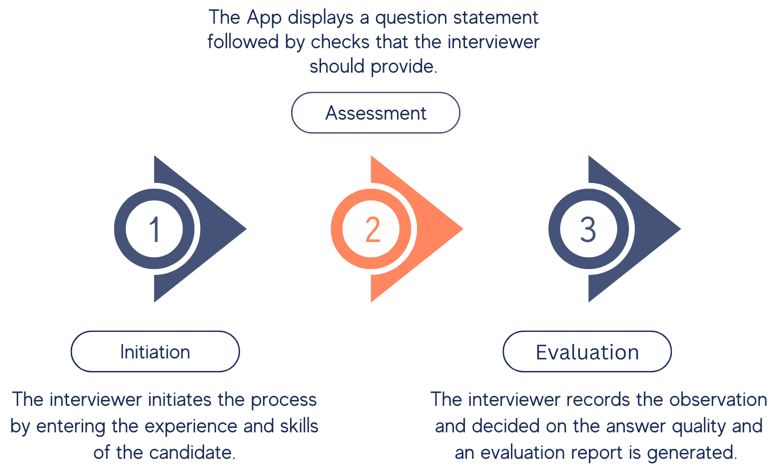
InterviewNinja loads shared banks easily, scores candidates fairly on their skills and abilities, and minimizes bias through real evaluations. It scales seamlessly across managers and locations, while maintaining quality and cutting hiring time.
Top features include:
- Auto Question Match: With InterviewNinja, hiring teams just need to pick a role. The platform automatically presents questions, lists what must-have skills should be tested, and updates the question bank with team input.
- Score Grids: Hiring managers can rate candidates live on the phone or video and see points adding up. This allows them to quickly identify strong and weak spots and share them with the team instantly.
- Bias Checks: InterviewNinja flags gut picks or odd scores, minimizing manager bias in candidate interviews. When something feels amiss, it prompts for evidence, ensuring much-needed fairness and objectivity.
- Live Dashboards: When armed with InterviewNinja, HR teams can track all interviews in real time. This allows them to spot top candidates easily and pick the right fit quickly.
Transform Hiring with Wissen Tech
Unstructured hiring crumbles under the weight of modern business demands. As teams span multiple locations, the lack of standardization causes interviews to turn into chaos. Structured hiring powered by AI flips the script with standards everyone follows. From shared questions to score grids, it brings fairness and consistency to the hiring process while cutting confusion and bias.
See how InterviewNinja makes structured hiring simple and real. Book a demo today to attract the right hires before your rivals do.
FAQs
What breaks free-form interviews at scale?
In free-from interviews, questions are usually random and do not evaluate candidates evenly. It also introduces bias and lacks a standardized scoring mechanism.
How does structured hiring fix bias?
Structured hiring sets questions and score grids that force fact checks. Since everyone rates candidates the same way, it minimizes bias and ensures consistency.
Why pick InterviewNinja in 2026?
InterviewNinja utilizes shared question banks, scores roles, and flags issues while scaling to any team size with fair results.