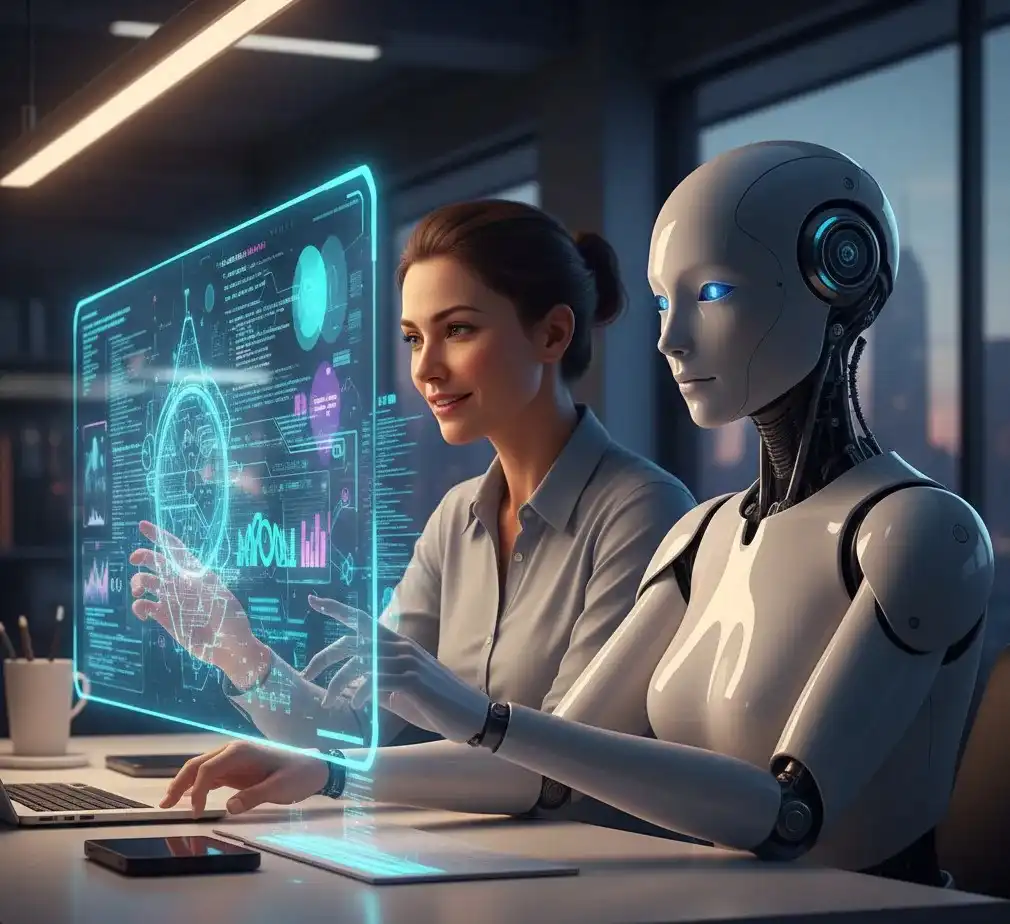
Artificial intelligence (AI) is now deeply embedded in enterprise IT environments. Gartner estimates that worldwide enterprise AI spending will exceed USD 3.3 trillion by 2029. Most organizations have moved past pilots and proofs of concept and have begun to use AI from the very foundational stage of creating technology, and not just a capability they add incrementally to their existing digital stack. AI systems are writing code, reviewing pull requests, generating test cases, and assisting with design decisions. This level of adoption has given rise to a more honest conversation inside engineering leadership teams. AI is not arriving as an external disruptor anymore. It is already sitting inside the development workflow. In other words, AI is no longer treated as a foe by engineers, but more as a companion in their daily work lives.
From foes to friends- what changed the equation?
What has changed more quietly, but more profoundly, is how engineers relate to these systems. Early fears framed AI as a competitor for engineering jobs. Engineers are now, however, discovering that their best work happens when AI systems operate beside them, not instead of them. The relationship looks less like automation and more like collaboration.
This is where human–machine co-creation begins. Engineers define intent, boundaries, and judgment. AI systems take it to the next level when they explore possibilities at a scale and speed humans cannot. The result is not just faster delivery alone but significantly better problem-solving at scale.
The key areas of Human AI collaborative transformation
Across the IT sector, this pattern of AI complementing human effort is taking shape in several distinct but connected areas. Let’s explore the top 4:
Vibe Coding: Letting Engineers Think in Outcomes, Not Syntax
Vibe coding reflects a shift in how developers engage with code. Instead of starting with exact instructions, engineers increasingly begin with intent. They describe what the system should achieve, the constraints it must respect, and the edge cases that matter in relevance to the objectives of the system. AI-assisted coding tools then propose multiple ways to reach that outcome.
This changes the mental load of engineering work. Developers spend less time wrestling with boilerplate templates or repetitive code structures. More time is spent evaluating logic, security implications, and long-term maintainability of the generated code. Engineers still own the code, but they are more focused on shaping the quality of the code through thorough review and refinement. With AI doing the initial work, engineers are no longer limited to the first solution that comes to mind when faced with a technical challenge.
What stands out is how this approach encourages exploration. Teams can quickly test alternative implementations, compare performance implications, and discard weak ideas early. Coding becomes less linear and more iterative, supported by a system that never gets tired of trying an alternative approach.
Vibe Product Management: Thinking Through Consequences Before Shipping
Product management has always involved a certain degree of uncertainty. Decisions are made with incomplete information, tight timelines, and competing priorities. Vibe product management introduces AI as a thinking partner in this uncertainty scenario and not as a decision-maker.
Product leaders can now explore scenarios with AI much before the features are built with code. AI systems analyze historical usage data, support tickets, adoption curves, and behavioral patterns. They then predict likely outcomes, potential friction points, and unintended consequences. This does not replace product judgment. It rather sharpens it.
Human product managers still define vision and value. They understand customer nuance and business context. AI helps them pressure-test the assumptions in their thinking. It asks uncomfortable questions through data. The result is fewer surprises after release and more confidence during prioritization. Product strategy becomes less reactive and more considerate of outcomes.
Vibe Design: Expanding Creative Space Without Losing Human Taste
Design teams are also experiencing a quiet transformation as AI becomes an integral part of their logic. AI-assisted design tools can generate layout options, accessibility improvements, and interaction patterns in a matter of seconds. This does not diminish the designer’s role. It expands the creative space they can explore when faced with roadblocks in new creative assignments.
Designers can now test multiple directions early, instead of committing to one too soon. They can see how changes affect usability, readability, and responsiveness across devices. In other words, AI suggests, and designers decide. Amidst all the automated or autonomous events shaping the design stage, the human taste, empathy, and brand understanding remain central with enough human involvement.
What improves here is the feedback loop. Iterations happen faster. Discussions become more concrete as they are supported by evidence, and not guesswork. The creative process remains human-led, but better informed thanks to AI.
Vibe Architecture: Reasoning About Systems at Scale
System architecture is perhaps where human–AI co-creation demonstrates its deepest value. Modern IT systems are complex by default. Distributed components, cloud-native patterns, and evolving workloads make architectural decisions difficult to reverse.
AI-supported architecture allows teams to model scenarios before committing. System architects can explore how systems behave under load, during failures, or as usage grows with AI simulations. They can evaluate cost, performance, and resilience trade-offs early, when change is still affordable.
Crucially, architects remain accountable. AI does not understand organizational risk appetite or regulatory nuance on its own. Humans bring that context. AI brings simulation and scale. Together, they reason more thoroughly than either could alone for any complex digital architecture needs.
Co-Creation Is Becoming the Engineering Default
Human–machine co-creation is no longer a futuristic or scary proposition for the tech community. It is becoming the default way software is built for organizations that want to be future-ready. Across coding, product management, design, and architecture, AI systems are helping engineers think more broadly with data and decide with confidence.
The organizations that benefit most will not be those that simply deploy AI tools. They will be the ones who redesign workflows, responsibilities, and governance to support true collaboration between humans and machines. This is not a trivial shift. It requires technical maturity, cultural readiness, and disciplined execution. This is where a dedicated technology partner like Wissen matters. We help organizations integrate AI responsibly, align it with engineering practices, and ensure that co-creation leads to measurable outcomes. When done well, human–AI collaboration does not dilute engineering excellence. It amplifies it. Get in touch with us to know more.
FAQs
What is human–machine co-creation in software engineering?
Human–machine co-creation refers to engineers and AI systems working together to explore solutions, test scenarios, and make better design and development decisions throughout the software lifecycle.
How does AI support engineers without replacing them?
AI supports engineers by accelerating exploration, analyzing patterns, and simulating outcomes, while humans retain control over judgment, accountability, and business context in IT systems.
Why is human–AI collaboration important for modern IT organizations?
As software systems grow more complex, human–AI collaboration helps IT teams reduce risk, improve decision quality, and build more resilient and scalable digital solutions.